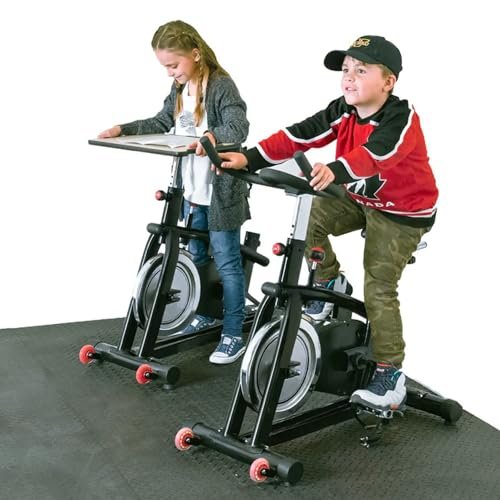
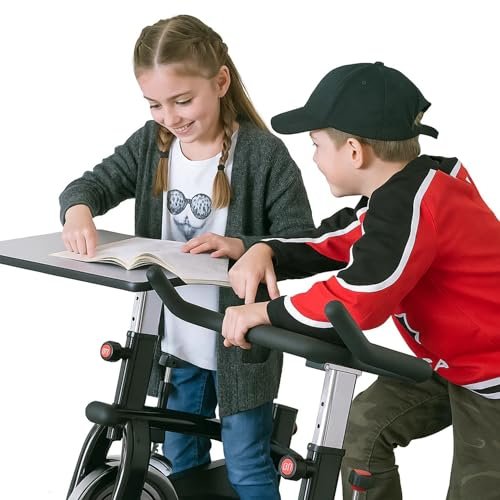
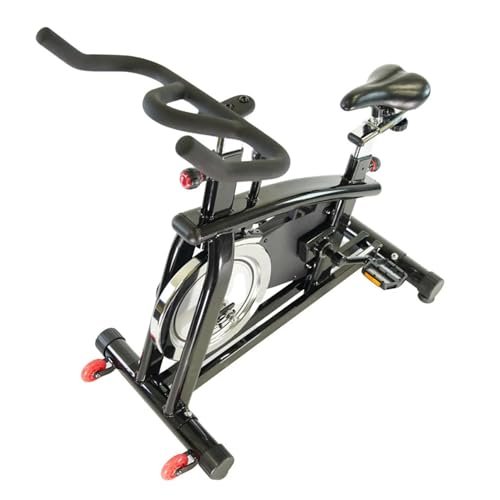
The Neon Jr. Bike's safety comes from four specific mechanical decisions — not from marketing language. Each one addresses a real failure mode that cheaper kids' bikes don't solve. Here's what each feature does and why it matters.
Free-Wheel Flywheel
This is the most important safety feature on the bike, and the one parents almost never know to ask about. On a fixed-gear flywheel — standard on most budget kids' bikes — the flywheel's rotational momentum keeps the pedals moving even after a child stops pushing. If a child suddenly wants to stop, the cranks keep driving their legs forward until the flywheel bleeds off speed. At 15 lbs of spinning mass, that's enough force to startle or injure a small child who stops unexpectedly.
The Neon Jr. uses a free-wheel design. When a child stops pedaling, the cranks stop with their feet — immediately, without resistance from the flywheel. The flywheel keeps spinning on its own bearing, but it's mechanically decoupled from the pedals. A kid who wants to stop just stops. No fighting the mechanism.
This distinction shows up repeatedly in parent forums as the exact concern people can't name — they describe it as "what happens if my kid tries to stop suddenly" — without knowing the terminology. The free-wheel design is the direct answer.
Press-Down Brake Stop
The friction brake pad adjusts resistance during riding. The press-down stop is a separate mechanism — a physical brake that locks the flywheel completely when pressed down. These are two different things doing two different jobs.
In a supervised classroom or therapy setting, the press-down stop gives a teacher or parent an immediate override. It also gives an older child a reliable emergency stop that doesn't require spinning a resistance knob. The result: two independent stopping mechanisms on one bike, which is the same approach used in commercial adult spin bikes.
Non-Slip Pedals
The pedals use a textured non-slip surface. This matters most during the first few minutes of riding, when a child is still finding their footing, and during any session where a child is distracted — homework, watching TV, a classroom lesson. Foot slip on a spinning pedal is the most common minor injury on kids' bikes; the textured surface reduces that risk without requiring toe cages or straps that can trap a child's foot.
Low Center of Gravity and Stable Base
The assembled bike stands 27 inches tall with an 18-inch-wide base. That's a significantly lower center of gravity than a standard adult spin bike, which typically sits at 45–50 inches at the saddle. For a child between 3'3" and 5'8", the seat height and base width are proportioned to keep the rider's weight centered rather than elevated. Combined with the 11 and 14 gauge steel frame — which provides structural mass that resists tipping — the bike doesn't shift or wobble under an active child who's moving laterally or reaching for something on a desk.
The 250 lb structural rating reinforces this. A frame built to hold 250 lbs doesn't flex or torque under a 60 lb child the way a lighter-rated frame does. That rigidity is part of what makes the bike feel stable rather than wobbly during use.
A Note on Supervision
None of these features replace adult supervision for younger children in the fit range — particularly those at the lower end (3'3", approximately age 4–5). The bike is designed to be safe, not to be self-supervising. For classroom use, Element Fitness recommends having a staff member present during riding sessions. For home use with very young riders, an adult in the room during initial sessions is worth the time investment until the child is comfortable with the stop mechanisms.